
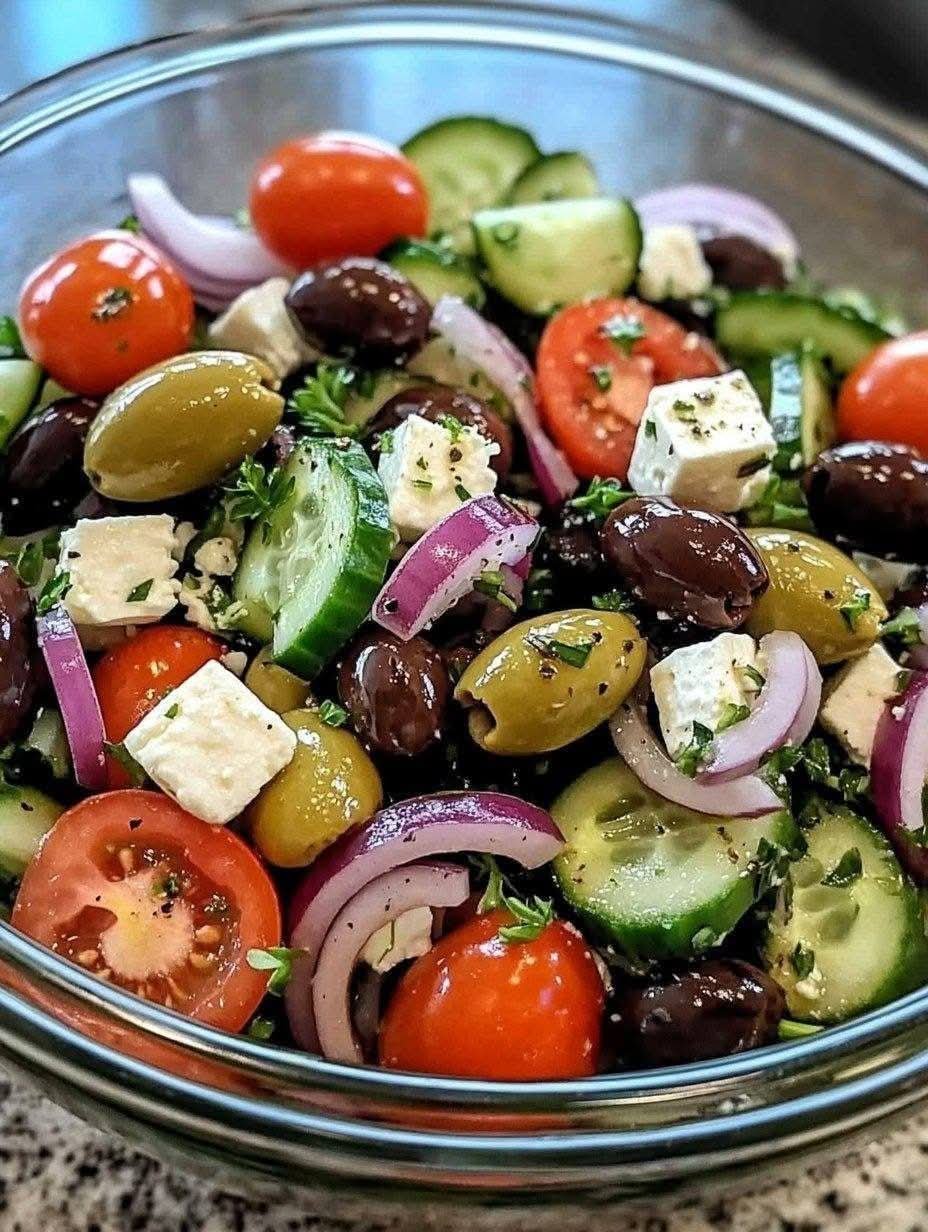
Classic Greek Salad (Horiatiki)
Description:
Classic Greek Salad, also called Horiatiki, is a rustic and refreshing salad traditionally made with simple, high-quality ingredients: ripe tomatoes, crisp cucumbers, sharp red onions, tangy Kalamata olives, and creamy feta cheese. It’s dressed with a basic but flavorful mix of olive oil, oregano, and a splash of red wine vinegar or lemon juice. This salad is a staple of the Mediterranean diet—fresh, healthy, and incredibly satisfying.
Time Required:
Prep Time: 15 minutes
Cooking Time: 0 minutes
Total Time: 15 minutes
Servings: 4
Ingredients:
Ingredient Amount
Ripe tomatoes 3 medium, cut into wedges
Cucumber (unpeeled) 1 large, sliced into half-moons
Red onion ½, thinly sliced
olives ½ cup, whole or pitted
Feta cheese (block) 200g (about 7 oz), in thick slices
Green bell pepper (optional) ½, sliced into rings
Dried oregano 1 tsp
Extra virgin olive oil ¼ cup (60ml)
Red wine vinegar 1 tbsp
Salt To taste
Freshly ground black pepper To taste
Instructions:
Step 1: Prepare the Vegetables
Wash and cut the tomatoes into wedges. Use ripe, juicy tomatoes.
Slice the cucumber into thick half-moons (no need to peel unless the skin is bitter).
Thinly slice the red onion and green bell pepper, if using.
Pit the Kalamata olives if desired (traditional Greek salads usually keep them whole).
Step 2: Assemble the Salad
In a large shallow bowl or platter (not a deep bowl), layer the tomatoes, cucumbers, onion, olives, and bell peppers.
Gently mix with your hands or a spoon. Try not to mash the tomatoes.
Step 3: Add the Feta
Place thick slabs of feta on top. Avoid crumbling it unless you prefer a more modern presentation.
Step 4: Dress the Salad
Sprinkle the dried oregano generously over the salad and feta.
Drizzle with extra virgin olive oil and red wine vinegar (or lemon juice).
Season with salt (lightly, because feta and olives are salty) and black pepper.
Step 5: Serve Immediately
Serve at room temperature with crusty bread or as a side to grilled meats, seafood, or a mezze platter.
Tips for the Perfect Greek Salad:
Use block feta, not crumbled, for authenticity and better texture.
Don’t refrigerate tomatoes before using—room temperature enhances flavor.
Extra virgin olive oil is essential—this salad is all about fresh ingredients.
Avoid adding lettuce or other greens—it’s not traditional in .
Let the salad rest for 5–10 minutes after dressing to let the flavors meld.
Frequently Asked Questions (FAQs)
Q: Can I make Greek salad ahead of time?
A: You can chop the vegetables a few hours in advance, but don’t add salt, feta, or dressing until just before serving to avoid sogginess.
Q: Is Greek salad healthy?
A: Yes! Greek salad is packed with nutrients, healthy fats (from olive oil), fiber (from veggies), and calcium/protein (from feta).
Q: What type of olives should I use?
A: Traditional Greek salad uses Kalamata olives, known for their dark color and rich flavor. Don’t substitute with regular black olives—they lack the same depth.
Q: Can I use crumbled feta instead of a block?
A: While not traditional, crumbled feta is fine for convenience. However, using a block has better flavor and texture, especially when served in slices on top.
Q: What can I serve Greek salad with?
A: Greek salad pairs wonderfully with:
Grilled meats like lamb, chicken, or pork souvlaki
Fresh pita or crusty bread
Roasted potatoes
Hummus and tzatziki dips
Seafood like grilled shrimp or calamari
Q: Can I use lemon juice instead of vinegar?
A: Yes! Lemon juice adds a fresh, citrusy zing. Some recipes prefer it over vinegar, depending on regional G
reek variations